EV Charger Installation for a Detached Garage in Ocala, FL
Your panel gets checked before you get a number, permits are filed with the job, and the price is fixed before any tool comes out.
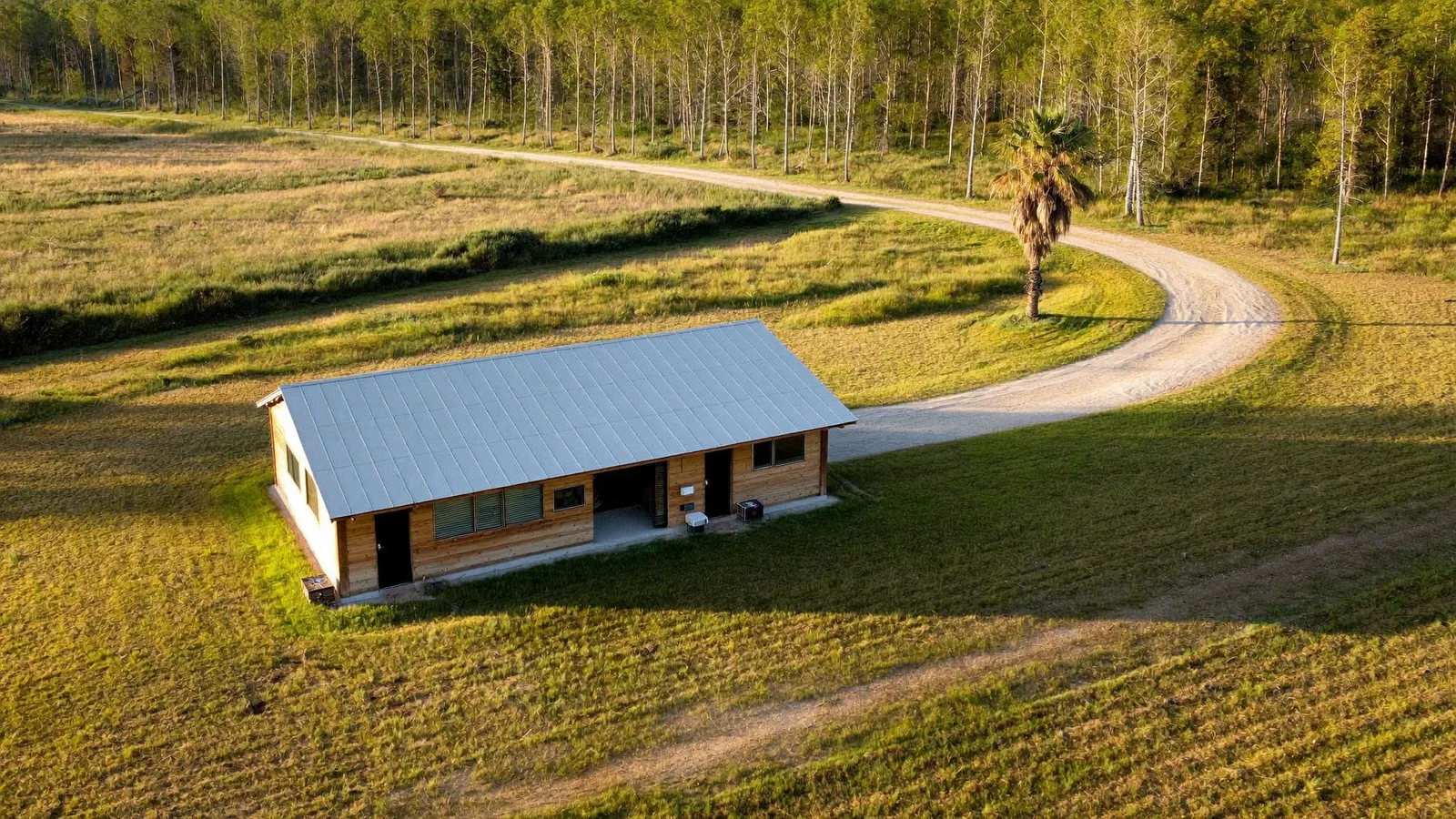
Can you run power to a detached garage or shop for an EV charger?
Yes, but the job changes shape once the circuit leaves the main panel's building. Trenching, conduit and distance replace what would otherwise be a straightforward wall-to-wall pull.
That's most of what separates a detached run's price from an attached-garage install, and it's worth understanding before you get a number.
What Changes When the Run Leaves the Main Building?
Once the circuit leaves the building envelope, three things change: how the wire gets there, how big it needs to be, and whether it needs its own grounding system at the far end.
NEC Table 300.5 sets minimum burial depths for underground wiring: 24 inches for standard direct-burial cable, less in some cases for rigid conduit or GFCI-protected circuits. Trenching and conduit are most of what separates this job's price from a standard install.
Distance also brings voltage drop into the picture. Push a 40-amp circuit much past 100 feet on standard wire and the drop starts cutting into your charger's actual output, not just its paperwork rating. Past a certain distance, a bigger wire gauge or a subpanel at the far end, fed by its own grounding electrode system per NEC Article 250.32, often beats one long, oversized circuit.
This is a genuinely common job here, not an edge case. Marion County's larger horse-property and rural lots put a lot of detached garages, shops and barns well outside what a standard suburban circuit run assumes.
What Does a Detached-Garage EV Charger Job Include?
- Trenching or overhead runWhichever fits the property and terrain, quoted after a site walk rather than guessed over the phone.
- Conduit sized and buried to code depthProtects the wire and meets NEC's minimum burial-depth table for the routing chosen.
- Wire gauge sized for distanceNot just amperage. Voltage drop over the actual run length decides the wire size, not a standard chart alone.
- Subpanel added when distance calls for itIts own grounding electrode system installed at the detached structure per NEC Article 250.32.
- Permit filedCovers both structures where the jurisdiction requires it, filed before install day.
- Charger mounted and testedAt the detached structure, tested under load before the electrician leaves.
How Does a Detached-Garage or Shop Install Work?
- 1
Site walk and quote
An actual look at the distance, terrain and any obstacles between the panel and the structure. This job doesn't get quoted from a phone call alone.
Time on site: on-site visit
- 2
Permit filed
Filed with the correct building department, covering the run and, if used, a new subpanel.
Time on site: typically a few business days in Marion County
- 3
Trenching and conduit day
Trench dug to code depth, conduit laid, wire pulled.
Time on site: half day to a full day, terrain-dependent
- 4
Charger install and test
Circuit terminated, charger mounted at the detached structure, tested under load.
Time on site: 2 to 4 hours
- 5
Inspection
Scheduled once the local inspector's calendar allows.
Time on site: usually within a week or two
Where you landPower at the detached structure sized correctly for the distance, with the permit closed out.
What Does It Cost to Run Power for an EV Charger to a Detached Garage in Ocala?
USD
- Short trenched run, under 50 feet$1,800–$3,000per installStraightforward trenching with no major obstacles.
- Longer trenched run, 50 to 150 feet$3,000–$5,500per installWire gauge often steps up to control voltage drop over that distance.
- Subpanel addition instead of a long run$1,200–$3,000per subpanelOften the better economics past roughly 100 feet; compare both before committing.
- Overhead run, where trenching isn't practical$1,500–$3,500per installDepends on pole placement and clearance requirements.
These are typical Ocala metro ranges, not a quote. The site walk sets your exact price, since terrain and distance vary this job more than any other on this site.
Attached Garage, Driveway, or Detached Garage: Does It Change the Job?
Compared onTypical costWeather exposureBest for
Attached garage
Best forHouseholds where the vehicle's routinely parked in the attached garage.
- Shortest possible circuit run, usually the lowest cost
- Charger and connection protected from weather
- Doesn't help if the vehicle or equipment lives in a separate structure
- Garage layout and parking configuration limit mount location
Driveway or exterior wall on the main structure
Best forHouseholds that park outside the garage or want the charger closer to where the car actually sits.
- Shorter run than a detached structure, usually no subpanel needed
- Common enough that pricing is predictable
- Outdoor GFCI and weatherproofing requirements apply, same as an outdoor NEMA 14-50 install
- More exposed to weather than a garage-mounted unit
Detached garage or shop
Best forHorse properties, rural lots and larger acreage where the vehicle, barn or shop sits away from the main house.
- Charger lives where the vehicle or equipment actually is
- A subpanel can share power with other outbuilding loads down the road
- Highest cost of the three options, driven by trenching and distance
- A subpanel adds its own grounding-system requirement and cost
- Longer install timeline than an attached or driveway install
Attached or driveway mounting is the cheaper, faster call whenever the vehicle's routinely parked there. A detached run makes sense once the alternative is walking a charging cord 100-plus feet across the yard every night. Don't run one long, oversized circuit past roughly 100 feet without pricing a subpanel against it first. The subpanel is often close to the same cost and removes the voltage-drop problem entirely.
EV Charger Installation for a Detached Garage in Ocala, FL — questions
There's no single number. It depends on the wire gauge and amperage, but past roughly 100 feet, voltage drop and wire-gauge cost usually make a subpanel at the far end the more economical choice than one long, oversized circuit. We price both options during the site walk.
In most cases, yes, or run overhead where a pole and clearance make that practical. Trenching follows the shortest reasonable path and gets backfilled and restored as part of the job, but it's still yard disruption worth planning around.
Yes, meaningfully. Trenching, conduit and the extra wire for distance typically put this job at $1,800 to $5,500, versus $700 to $1,700 for a straightforward attached-garage install. A subpanel can sometimes beat that range if the distance is long enough.
Yes. A circuit or subpanel feeding a detached structure needs a permit the same as any other EV charger job, filed with the correct building department for your address.
Yes. This is one of the more common versions of this job in Marion County's horse country and rural properties. A subpanel at the barn or outbuilding often makes sense anyway if there's other equipment (wash rack, arena lighting, well pump) already drawing power out there.
Licensed EV charger installation for Ocala and Marion County. Panel checked before you're quoted a price.
- Licensed & insuredEV charger circuits are electrical work performed under a real electrical contractor license, not a specialty license of their own.
- Panel checked firstYour panel's actual spare capacity is checked before you're quoted a price, not assumed from its age or amperage label.
- Permitted and inspectedThe permit gets filed and the inspection scheduled as part of the job, not left for you to chase down.
- Fixed price before work startsYou see the number in writing before any tool touches your panel.
Get a fast, fixed quote
Tell us your vehicle, your panel's age or amperage if you know it, and where you want the charger mounted. A written estimate follows, usually within a business day.
Let's do it
Let's get you charging.
This job needs an actual look at your property before it can be priced. Get that scheduled first.